Convert / Flagship Websites
One site. Three readers: the buyer, the committee and the machine.
We design and build company websites that work for all three: a clear argument for the buyer, the speed and accessibility a committee checks, and pages an AI can read accurately. The people on the first call build it.
This page, measured on your visit
- Largest paint LCP
- …good ≤ 2.5 s
- Layout shift CLS
- 0.000good ≤ 0.1
- Response to input INP
- —Click or tap anywhere
Real numbers from your browser. Thresholds are Google’s published “good” values.
Why sites fail
Every company site has three readers. Most fail at least one.

What the buyer is asking · sample
- Is this for a company like mine?
- Who has done this before, and did it work?
- What happens if I click this?
01 The buyer
They decide in a few screens whether you understand their problem. Most sites spend those screens talking about the company.
What we buildA page-by-page argument written from the questions your buyers actually ask, before any design starts.

First load on a phone · illustration
Typical site
- 0.5 s
- 1 s
- 1.5 s
- 2.5 s
- 3.5 s
Built to target
- 0.5 s
- 1 s
- 1.5 s
- 2.5 s
- 3.5 s
02 The committee
Someone forwards your link to a CFO, a board member, a compliance lead. It opens on a phone between meetings, and that first load is the impression.
What we buildSpeed and accessibility targets set before design, measured on real visits, and reported.

AI answer · sample
“Who builds websites for mid-market manufacturers?”
… firms often named include Competitor A and Competitor B, both known for …
03 The machine
Before anyone calls, an AI has already summarised your category. If your pages can't be read cleanly, it describes someone else.
What we buildStructured data, clean semantic pages and plain answers to buyers' questions, shipped with the build rather than sold later.
What you’re paying for
Most of what makes a site work is invisible. Scroll to see it.
1Message
The argument
Who decides, what each of them needs to see, and in what order. Written before a pixel is designed.
- Buyer map
- Page plan
- Copy
Message: The argument 2Design system
The system
Type, colour, spacing and components defined once, so every page your team adds later stays on brand.
- Tokens
- Components
- Page library
- Ink#052322
- Deep#0E4A4C
- Tide#127880
- Accent#7DE3D8
- Rose#E9A29D
- Paper#FBFCFC
Aa
Aa
Design system: The system 3Build
The structure
Fast, accessible, semantic code that you own, structured so your team can change pages without a developer.
- Semantic HTML
- WCAG 2.2 AA
- Content editing
Build: The structure 4Machine view
What an AI reads
Structured data, a clean outline and plain answers, so search engines and AI assistants describe you accurately.
- Schema.org
- Outline
- llms.txt
HOOKANDREEL.NET/SERVICES/WEBSITES :: MACHINE VIEW
# what a crawler or AI assistant reads on this page
── PAGE
- TYPE
- Service
- NAME
- Flagship Websites
- PROVIDER
- Hook and Reel
- LOCATION
- Charleston, SC
- AUDIENCE
- $1M–$50M+ companies, small-cap public companies
- FIRST_STEP
- Free full site audit
── JSON-LD (live on this page)
{
  "@type": "Service",
  "name": "Flagship Websites",
  "serviceType": "Website design and development",
  "areaServed": "United States"
}
Machine view: What an AI reads 5Measurement
The scoreboard
Speed measured on real visits, every step from first visit to booked call tracked, and a 90-day plan for what to test first.
- Field vitals
- Events
- 90-day plan
THE SCOREBOARD · ILLUSTRATION, WITH YOUR LIVE NUMBERS
- page_view
- xray_viewed
- audit_clicked
- form_sent
- call_booked
- LCP
- …
- CLS
- 0.000
- INP
- —
Speed values are yours, from this visit. The funnel is illustrative.
Measurement: The scoreboard
The exhibit
Don’t take our word for it. Test the page you’re on.
This page, measured on your visit
- Largest paint LCP
- …good ≤ 2.5 s
- Layout shift CLS
- 0.000good ≤ 0.1
- Response to input INP
- —Click or tap anywhere
- Server response TTFB
- …good ≤ 800 ms
Real numbers from your browser. Thresholds are Google’s published “good” values.
Or run the same tests anyone would. Each opens on this exact page, in a new tab.
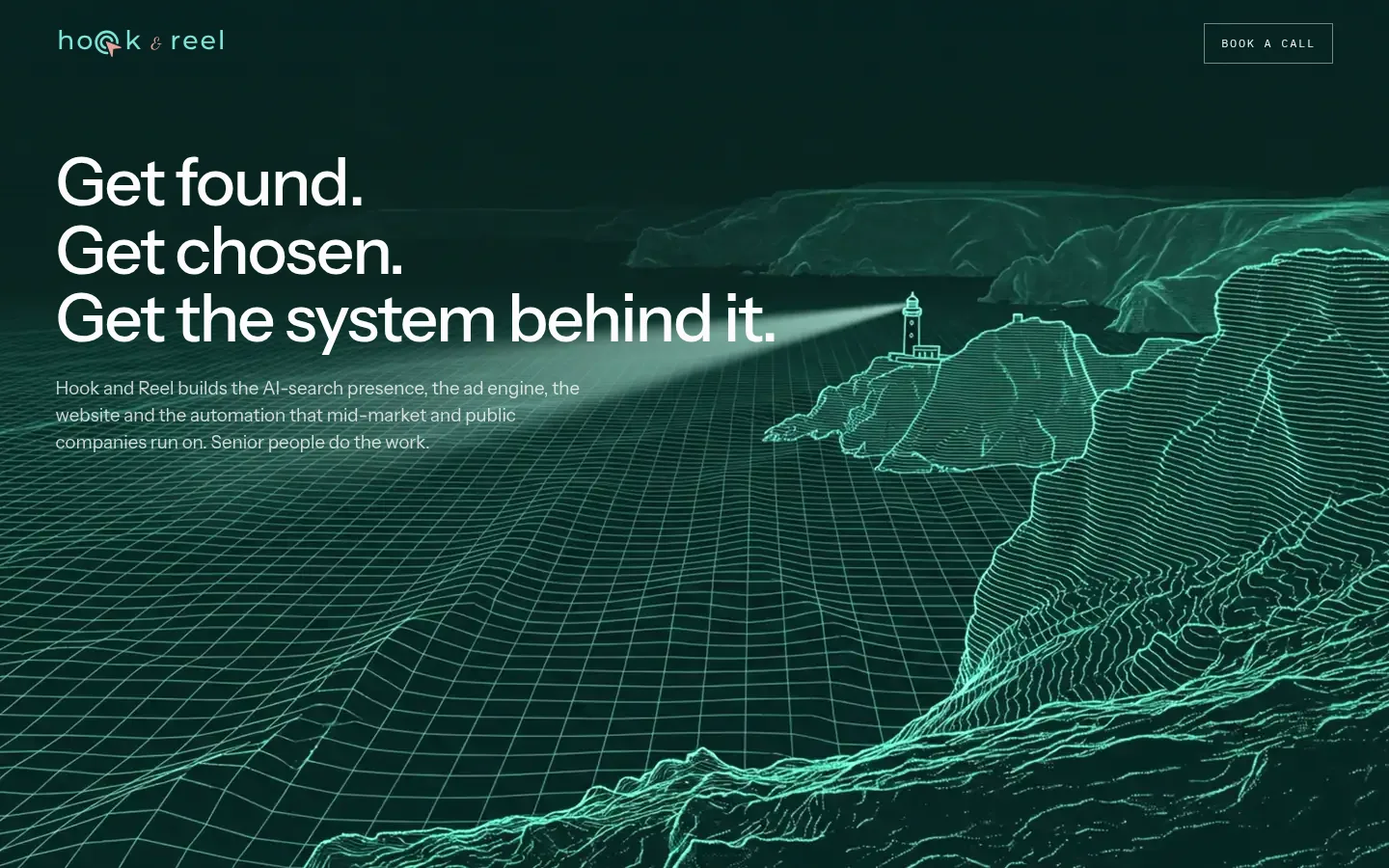
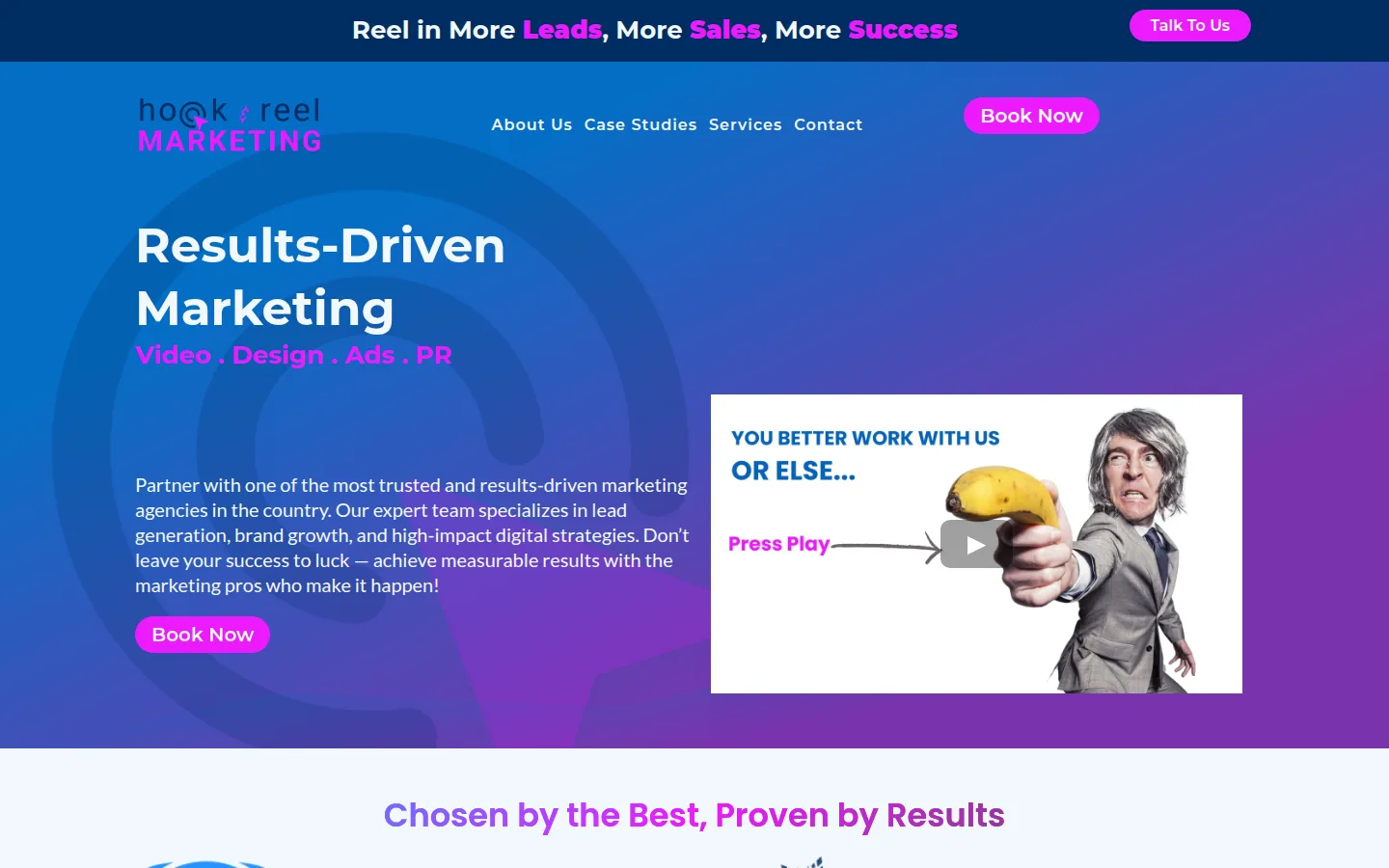
Our own site, before and after.
hookandreel.net as it was, and as we rebuilt it. Same test, same day: Lighthouse on a simulated mid-range phone, measured 26 October 2026.
 BeforeAfter
Before After
- Performance
- 4887
- Accessibility
- 92100
- Best practices
- 77100
- Ready for AI agents
- 33100
- Time the page is frozen while loading
- 3.7 s0.3 s
Lighthouse scores move a few points between runs. “Ready for AI agents” is Lighthouse’s agentic-browsing check; being readable is not a guarantee of being cited.
How it runs
Four tracks, one plan, working pages every week.
Message, design, build and search move in parallel, so nothing waits on a big reveal. You review real pages on a private staging site as they’re built.
Message and content
Weeks 1 to 2.Week 2 Buyer map, page plan and copy
Design system
Weeks 1 to 3.Week 3 Design system approved
Build
Weeks 2 to 4.Week 4 Working site on staging
Search and AI readiness
Weeks 3 to 5.Week 5 Redirects, schema, readability check
Launch and handover
Weeks 5 to 5.Week 5 Live, your team trained, 90-day plan
Typical for a company site of 8 to 12 pages. Your plan, with dates, is in the written quote.
Price
A fixed price, in writing, before we start.
Custom builds from$10,000
Where yours lands depends on the four factors here. After the free audit and one call, you get a written quote with every line itemised. It only changes if the scope does, and it’s paid by milestone, never by the hour.
What sets the price
How far each can move it Where it usually lands
- 01Pages and templatesHow many distinct page types the site needs, not how many pages it has.
- 02IntegrationsYour CRM, booking, forms, data feeds, an SEC filings feed for listed companies.
- 03ContentWho writes it, how much moves over from the current site, and how much is new.
- 04Signature momentsMotion, interactive tools or 3D: the pieces that make a site unmistakably yours.
We’re the wrong choice if
- You need a template site live this week.
- Nobody who signs off can be part of the process.
- You’d rather rent a site from a platform than own one.
Your options
Three ways to get a flagship site.
| An in-house hire | A large agency | Hook and Reel | |
|---|---|---|---|
| Who does the work | Whoever you can hire and keep | A team assembled after the pitch | The people on the first call |
| How it’s priced | Salary, tools and time, every year | Often hourly, or a range that moves | A fixed price, in writing, before we start |
| Who owns the code and accounts | You | Sometimes the agency | You, from day one |
| Speed and accessibility | Depends on the hire | Usually promised, rarely published | Targets set before design, measured after launch |
| Ready for AI search | A later project | Often a separate retainer | Shipped with the build |
Questions
What buyers ask before a rebuild.
What does it cost?
Custom builds start at $10,000. Where yours lands depends on pages, integrations, content and signature moments; after the free audit and one call you get an itemised, fixed quote in writing, and it only changes if the scope does.
How long does it take?
About five weeks from kickoff to launch for a typical company site. You review working pages on a private staging site every week, not a big reveal at the end.
Who owns the code?
You do: the code, the domain, the hosting and the analytics accounts, all in your name from the first day.
Can our team edit it?
Yes. Your team edits and publishes pages without a developer, inside a design system that keeps every new page on brand.
What happens to our search rankings?
We map every old address to its new one, keep the pages that rank, and check indexing after launch, so the move doesn’t cost you what you’ve earned.
How accessible will it be?
We build to WCAG 2.2 AA and test it twice: with automated checks, and by hand with a keyboard and a screen reader.
What does “AI-readable” mean?
Pages that AI assistants can crawl, parse and summarise accurately: clean structure, structured data and plain answers to your buyers’ questions. It improves how you’re described; nobody can honestly guarantee a citation.
Start here